



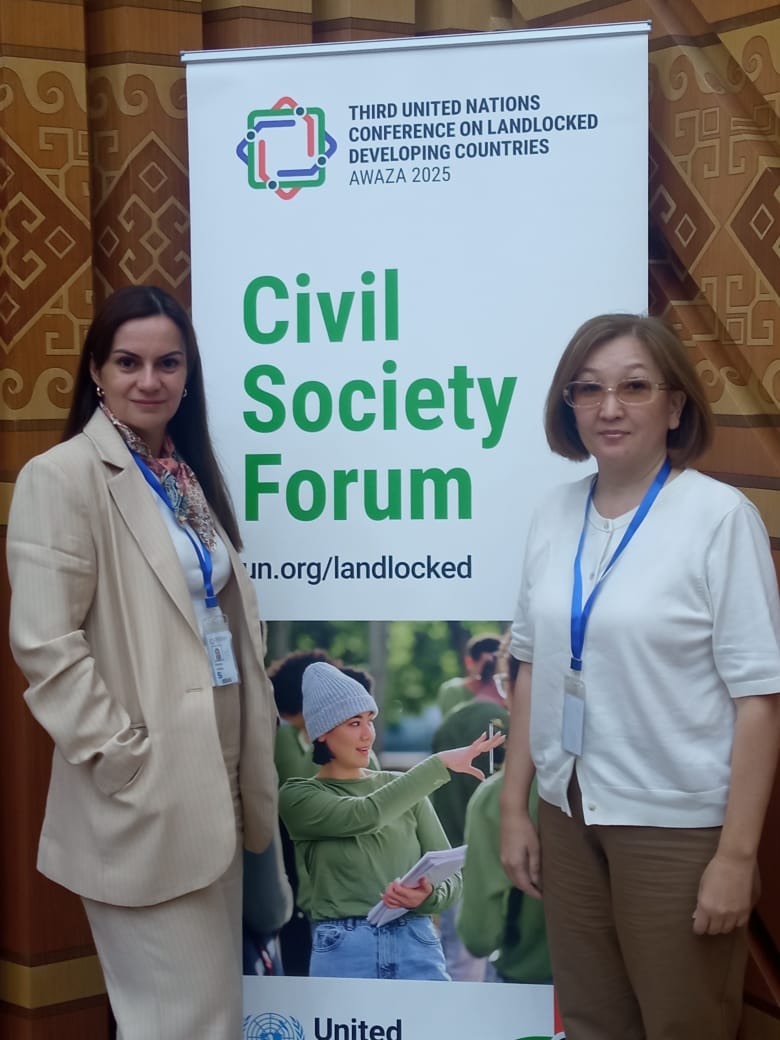
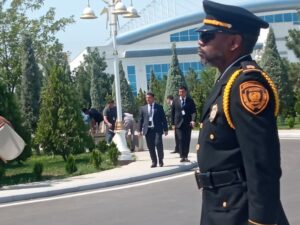
The LLDC3 Civil Society Forum was held as part of the Third United Nations Conference on Landlocked Developing Countries (LLDCs) in Avaza, Turkmenistan (5-8 August 2025). Civil society representatives from around the world had the opportunity to engage with world leaders, UN heads and other stakeholders to share experiences and help shape the sustainable development agenda to achieve the SDGs.
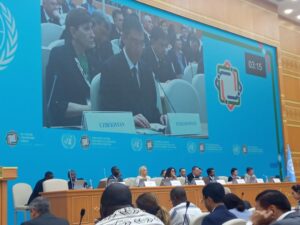
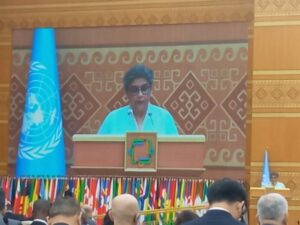
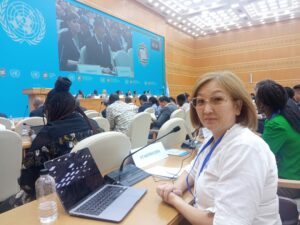
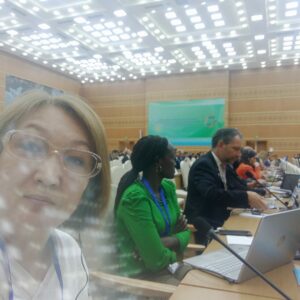
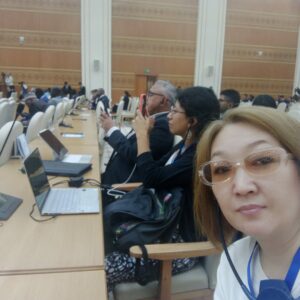

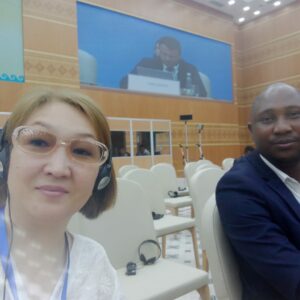
Representatives of the Public Foundation Our Century participated as speakers at Plenary Session 2: “Digital Economy, Innovation and Sustainable Development” at the Civil Society Forum.
Innovation and digital connectivity are key to unlocking opportunity in landlocked developing countries.
This session focused on addressing the digital divide, strengthening digital infrastructure and supporting innovation ecosystems to improve productivity and quality of services. Participants discussed how civil society can help improve digital inclusion and contribute to the Avaza Action Agenda through transformative technologies. (https://www.lldc3.gov.tm/ru/tracks/civil-society-forum)
Also, representatives of the Our Century Public Foundation spoke at high-level round tables 4 and 5.
https://lldc3.gov.tm/high-level-thematic-round-tables
High-Level Thematic Roundtable No. 4: “Building resilient infrastructure, strengthening connectivity and promoting seamless transit systems for landlocked developing countries.”
The discussion focused on infrastructure challenges facing landlocked developing countries, such as limited access to seaports, poor road and rail networks and low levels of digital connectivity. Transport corridors and multimodal transport systems were seen as critical to promoting trade and reducing costs. Digital infrastructure and energy connectivity were also key themes, with a focus on bridging the digital divide and ensuring access to affordable and sustainable energy. Regional cooperation and international partnerships are noted as critical to overcoming these infrastructure barriers.
Below is the text of the speech of a representative of the Our Century Foundation:
Dear participants, colleagues, partners,
My name is Chinara Aitbaeva.
Our organization carries out civil monitoring of infrastructure projects – transport, digital, energy and cross-border.
Infrastructure is not just roads and wires. This is the basis for sustainable development, equal access to opportunity and overcoming exclusion.
Unfortunately, we are seeing examples of poor spending, lack of transparency, disregard for the needs of vulnerable groups and environmental risks. Therefore, monitoring and public control should be mandatory at all stages of project implementation.
Digital infrastructure is not an option, but the basis for development. Without the Internet, digital literacy and access to technology, people and small businesses remain outside the economy of the future. Not only is investment needed, but also programs that ensure equal access – especially for women, youth and rural residents.
Our recommendation is simple:
Infrastructure must be sustainable and equitable.
Projects are open for participation.
Cooperation – aimed at reducing inequality.
As a civil society, we strive not only to observe, but also to ensure accountability. Where local communities are involved, where environmental and social impacts are taken into account, where there is transparency, the results are better, and the benefits become truly public.
We urge:
- integrate public monitoring into all stages of programs;
- ensure access of vulnerable groups to information and decision-making;
- invest not only in hard infrastructure, but also in people, digital literacy and sustainable energy.
Regional cooperation is the key to sustainability. Corridors must be built in a spirit of trust and shared benefit.
Thank you for the opportunity to be heard. We hope that the voice of civil society will be taken into account not only in discussions, but also in decisions.
Thank you for your attention.
High-Level Thematic Roundtable No. 5: “Providing and mobilizing resources and strengthening global partnerships for sustainable development in landlocked developing countries.”
This session discussed the financing challenges that impede the sustainable development of landlocked developing countries. It was emphasized that domestic resource mobilization is critical for development, but landlocked developing countries will continue to rely heavily on external financing such as official development assistance (ODA) and foreign direct investment (FDI). The roundtable highlighted the need for innovative financing mechanisms and international partnerships to meet infrastructure and development needs. The role of remittances and debt sustainability is also examined, emphasizing the need to create an enabling environment for investment and debt relief.
Below is the text of the speech of a representative of the Our Century Foundation:
Dear participants, delegates, colleagues,
Thank you for the opportunity to speak at this thematic round table.
Our organization coordinates the External Aid Monitoring Group in the Kyrgyz Republic.
Despite efforts to mobilize domestic resources, landlocked countries remain heavily dependent on external assistance—(official development assistance) ODA and foreign direct investment.
Bilateral donors often tie their aid. By providing loans: raw materials and labor are often from the donor country, not the recipient country. As a result, poor and developing countries remain losers and, in addition, with large debts. We urge donors not to tie up aid; local raw materials and resources of the recipient country should be used.
Our monitoring confirms that transparency and accountability are key to improving aid effectiveness. However, unfortunately, there is often a lack of full and timely access to information about the distribution and use of funds, which reduces trust and complicates coordination.
It is especially important to note that in recent years, developed countries have allocated on average only about 0.35% of their gross national income to aid poor and developing countries. Only a few states have fulfilled the 0.7% of GNI commitment. This significantly limits the possibilities for sustainable development of countries, especially those that are landlocked.
We therefore urge developed countries to live up to their commitments and increase funding to the target of 0.7% of their GNI.
We also insist on the creation of national platforms and systems for transparent accounting and monitoring of foreign aid to landlocked developing countries. Such systems should ensure open access to data, involve civil society, and increase coordination between donors and recipients.
In addition, it is necessary to develop innovative financial instruments with mandatory transparency mechanisms, effectively use migrant remittances and ensure debt sustainability.
Civil society is committed to continuing to work together to strengthen the transparency and effectiveness of international support.
In conclusion, I would like to emphasize that meeting funding commitments, increasing transparency and establishing monitoring systems are fundamental conditions for achieving sustainable development in landlocked countries.
Thank you for your attention.