



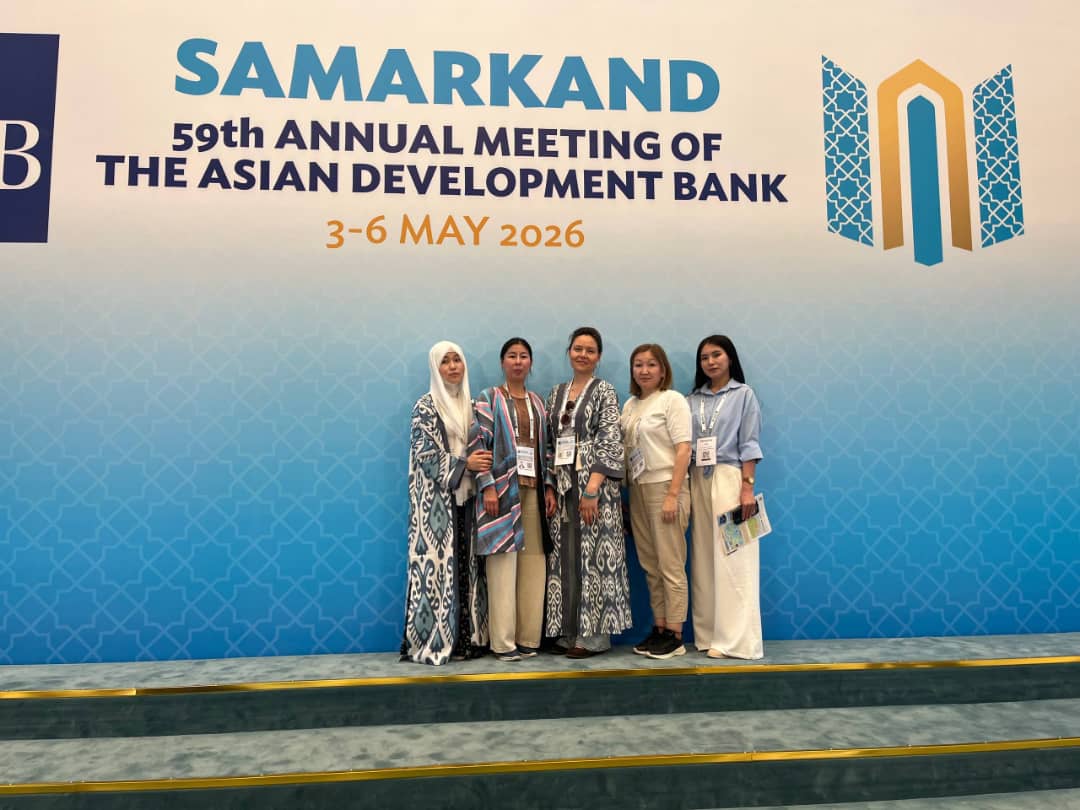
From May 3 to 6, 2026, the team of the Our Century Foundation and the External Aid Monitoring Group took part in the 59th Annual Meeting of the ADB, Samarkand, Uzbekistan.
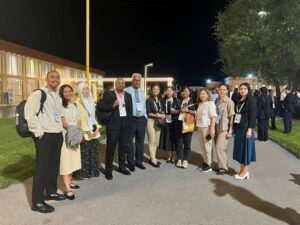
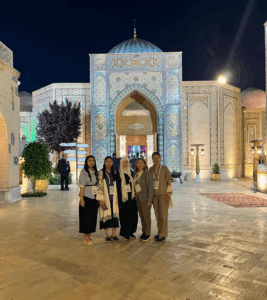

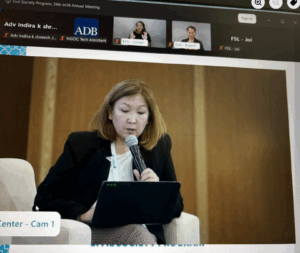
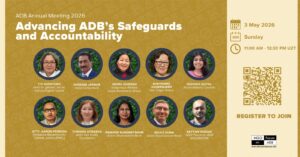
A representative of the Our Century Foundation spoke at the session: “Increasing the level of guarantees and accountability of the Asian Development Bank\Advancing ADB’s Safeguards and Accountability” May 3, 2026
Below is the text of the speech:
Dear colleagues,
Thank you for the opportunity to discuss such an important topic.
ADB has done significant work to develop its guarantee system.
However, our regional/national experience shows that the gap between policy and practice remains.
Problem: Gap between policy and practice
ADB guarantees are strong on paper
In practice: systemic violations and a formal approach
Risks are transferred to communities
This is especially noticeable in cross-border projects.
In projects such as CASA-1000, we see problems in the areas of consultation and compensation transparency.
In CAREC transport corridors, issues of resettlement and access to information remain sensitive.
We have identified significant concerns regarding potential violations of the principles of transparency, accountability and good governance during the implementation of the project, including publicly disclosed cases of possible corruption.
According to publicly available sources, the (North-South) road was “hastily built for PR purposes” and contains numerous design and construction errors.
It is noted that the route passes through areas of avalanches and rockfalls, and also has problems with bridges and safety.
The project completion date has been repeatedly postponed (to 2027-2028), which indicates serious systemic problems with implementation.
There have also been allegations in the public space about possible theft of funds during the implementation of the project and insufficient supervision.”
We believe that these circumstances may indicate insufficient compliance with ADB policies and procedures, including project oversight, risk management, and accountability requirements.
Participation of local communities in energy projects in the region remains limited.
Taken together, these cases reflect broader structural problems. Delays in information disclosure, limited participation, and lack of accountability.
General conclusions for the region
Consultations are superficial
Guarantees are used as a “ticket box”
Complaints/requests have not yet led to systemic changes
Lack of real accountability
The key problem, in our opinion, is not so much the very existence of guarantees, but the mechanisms for their implementation.
We see three areas where improvements are possible:
First, strengthening mandatory compliance: stakeholder participation should influence decision making.
Second, strengthening accountability: compliance with safeguards needs to be more clearly linked to consequences.
Third, increasing transparency and independence of monitoring.
Requirements for ADB:
Mandatory consideration of NGO recommendations
Introduction of sanctions for non-compliance with guarantees
Publishing data in an accessible form
Strengthening the accountability mechanism
Critical Question: When will guarantees begin to protect people rather than the reputation of projects?
Thank you!
Dear colleagues
Thank you for the opportunity to discuss such an important topic.
ADB has done significant work to develop its safeguards system.
However, our regional/national experience shows that a gap between policy and practice remains.
Problem: Gap between policy and practice
ADB Safeguards are strong on paper
In practice: systematic violations and a formal approach
Risks are shifted to communities
This is especially noticeable in cross-border projects.
In projects such as CASA-1000,
we see challenges in the areas of consultation and compensation transparency.
In CAREC transport corridors, resettlement and access to information remain sensitive issues.
We have identified serious concerns related to potential violations of the principles of transparency, accountability, and good governance during project implementation, including publicly disclosed instances of possible corruption.)
According to public sources:
the road was “built in a hurry for PR” and contains numerous design and construction errors
It is noted that the route passes through avalanche and rockfall zones, and also has bridge and safety issues.
The project’s completion date has been repeatedly postponed (to 2027–2028), indicating serious systemic implementation problems.
Claims have also been made in the public space regarding possible embezzlement of funds during the project’s implementation and insufficient oversight.
We believe these circumstances may indicate insufficient compliance with ADB policies and procedures, including project oversight, risk management, and accountability requirements.
Community participation remains limited in the region’s energy projects.
Taken together, these cases reflect broader structural challenges. Delays in disclosure,
limited participation
and insufficient accountability.
General conclusions for the region
Consultations are perfunctory
Safeguards are used as a “checkbox”
Complaints/requests are not yet leading to systemic changes
Lack of real accountability
The key issue, in our view,
is not so much the existence of safeguards
but the mechanisms for their implementation.
We see three areas where improvements are possible:
First, strengthen mandatory compliance:
stakeholder participation should influence decisions.
Second, strengthen accountability:
it is necessary to more clearly link safeguards compliance with consequences.
Third, improve the transparency and independence of monitoring.
Requirements for ADB
Mandatory consideration of CSO recommendations
Introduce sanctions for non-compliance with safeguards
Publish data in an accessible form
Strengthen the accountability mechanism
Critical Question
When will safeguards begin to protect people, not the reputation of projects?
Thank you.