



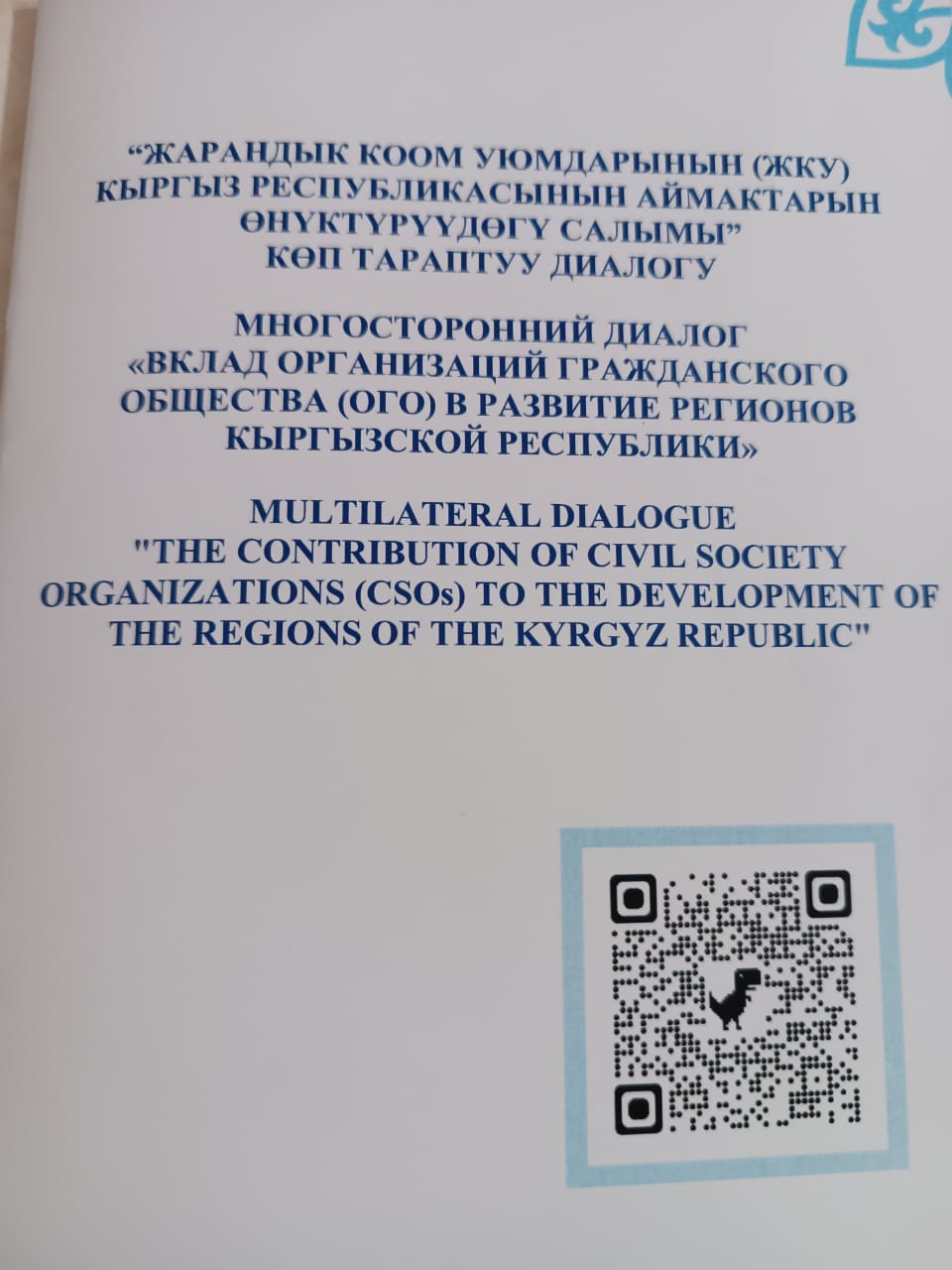
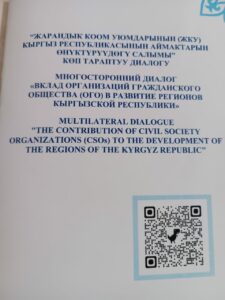
Multilateral dialogue “Contribution of civil society organizations (hereinafter – CSOs) to the development of regions of the Kyrgyz Republic”
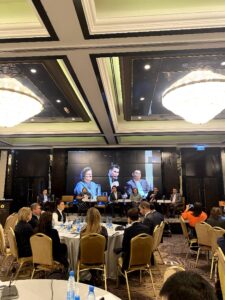
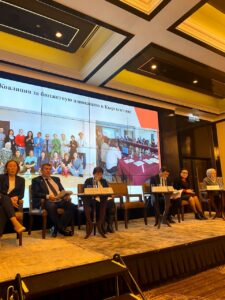
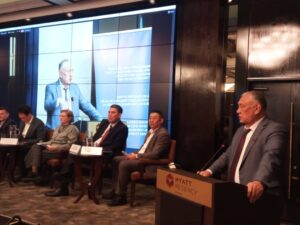
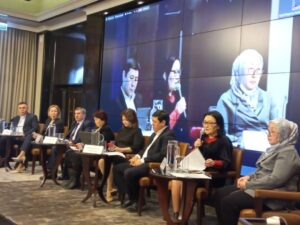
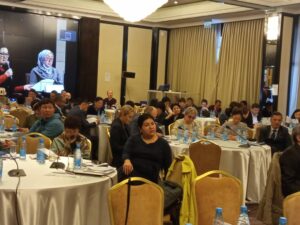
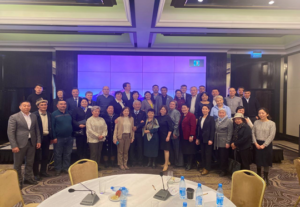
On March 1, 2023, the Multilateral Dialogue “Contribution of CSOs to the Development of the Regions of the Kyrgyz Republic” was held in the Shayyr Hall of the Hayat Hotel, which became a continuation of the Multilateral Dialogue “Favorable Environment for CSOs.”
The multilateral dialogue brought together representatives of government agencies, CSOs and business structures, where each party presented its vision, contribution and ongoing work on the development of the country’s regions. Based on the results of the presentations and discussions, certain recommendations were developed that will be sent to the relevant institutions.
Discussions took place in 4 panels, where after the presentations of the speakers of each panel, the moderators summarized in question-and-answer form.
Panel discussion No. 1: Regional development planning with the participation of citizens and CSOs.
The discussion focused on the transition to planning using data, modern forecasting methods and multi-stakeholder partnerships. Representatives of the Ministry of Economy and Commerce of the Kyrgyz Republic and the National Statistical Committee of the Kyrgyz Republic spoke about plans to introduce new data-based planning methods; on the system for monitoring regional development. Representatives of local state administrations and local governments shared their experience of partnering with business and civil society in the planning process, which brings “added value” both to the plans and development programs themselves, and to the process of their implementation. CSOs described a process of broad participation in the development of local socio-economic development programs and regional development programs.
Panel discussion No. 2: CSO coalitions and networks as the “circulatory system” of the regional development process.
The discussion focused on the role of coalitions and networks as a key channel for interaction and strengthening partnerships: 1) “bottom-up” and 2) horizontal partnerships between regions, municipalities, governments, local CSOs and communities. Coalitions and networks described how they play an advocacy role in this process, helping governments improve regulation; a successful legitimate representative of local communities (using the example of the Union of Local Self-Governments of the Kyrgyz Republic); a critical mechanism for mutual support and knowledge sharing (as exemplified by CSO networks created for the benefit of vulnerable groups); the role of a mentor for local CSOs (using the example of an association of women entrepreneurs).
Panel discussion #3: Data, digital services and digital forms of citizen participation
The panel discussion was devoted to the optimal form of cooperation between government bodies, CSOs and business in relation to improving the quality of data, the efficiency of their use and managing the risks of digitalization. Representatives of the State Agency for Civil Service and Local Self-Government under the Cabinet of Ministers of the Kyrgyz Republic spoke about the achievements and prospects for the development of the digital system “Sanarip Aimak”; CSO representatives presented the results of their efforts to improve digital skills and develop digital forms of citizen participation.
Panel discussion No. 4: Contribution of regional CSOs to solving local problems
The particular value of the contribution of CSOs is manifested in those issues and problems where the state and local government do not have enough powers or resources for a prompt and complete response, including emergency situations, conflict management, working with youth, improving infrastructure, etc. The speakers shared their experience and discussed new areas of multilateral partnership that will help better organize the joint work of CSOs and authorities at the local level, more effectively distribute responsibility and resources.
During the Multilateral Dialogue, the following speakers spoke within the framework of the foreseen topics:
- Choro Seyitovich Seyitov, First Deputy Minister of Economy and Commerce of the Kyrgyz Republic: “Planning and forecasting of development, based on data and linked to the budget”,
- Mamazhunus Razhapalievich Abilov, deputy head of the local state administration of the Nookat district of Osh region: “Coordinating efforts to develop the area with business and civil society”,
- Maxim Semenyak, World Bank consultant on socio-economic and strategic planning, “Use of data and existing information systems for socio-economic regional planning”,
- Nadezhda Nikolaevna Dobretsova, Chairman of the Board of the Institute for Development Policy, “Planning for inclusive development of regions: partnership, contributions and capabilities of the parties”,
- Aigul Zhalilovna Zharkynbaeva, head of the regional statistics department of the National Statistical Committee of the Kyrgyz Republic: “Regional development monitoring system: a management tool for authorities and a resource for analysis and monitoring for citizens,”
- Yunus Zairov, member of the Electronic Commerce Association, Chairman of the Logistics Committee of the AEC, State Duma and founder of the ISCO company:“Participation of business associations in regional development planning: needs, reality and prospects”,
- Alybaeva Zhanyl Ishenbekovna, Deputy Minister of Labor, Social Security and Migration: “Contribution of NGOs/networks providing social services to vulnerable groups”,
- Bektur Orozbaev, Director of the Union of Local Self-Governments of the Kyrgyz Republic: “The contribution of the municipal association to improving the working conditions of local governments in the interests of local communities”,
- Nazgul Turdubekova, League of Children’s Rights Defenders “Review of the role of networked social CSOs in addressing the social aspects of development in the regions”,
- Zeynep Eshmuratova, Zhanyryk network: “The role of networking in creating a system of assistance to people and families with disabilities”,
- Ivan Geletyuk, Chairman of the National Alliance of Business Associations (NABA): “NABA’s contribution to improving the business environment for regional entrepreneurs”,
- Ainura Sagynbaeva, Chairman of the Board of the Kurak Women’s Forum: “Experience of partnership of the national network “Kurak” with district associations of women entrepreneurs”,
- Daniyar Zhasoolov, Chairman of the Alliance for Food Security: “The role of networked knowledge exchange for strengthening food security”,
- Aida Kurbanova, deputy director of the Civil Participation Foundation: “Digital forms of citizen participation in the legislative process – platform of the Ministry of Justice: opportunities and needs for improvement”,
- Temir Kazybay, Project Coordinator of the Civil Initiative for Internet Policy (CIIP), “Application of digital solutions in the provision of services by local governments”.
- Aziz Soltobaev, coordinator of “Sanarip Insan”: “The role of civil society in the digitalization of remote communities and increasing the level of digital literacy of the population”,
- Nadezhda Dobretsova, Chairman of the Board of IPR: “The role of civil society in managing the risks of digitalization of governance”,
- Lyuksina Aigufovna Tekeeva, National Statistical Committee of the Kyrgyz Republic: “Assessing the contribution of NPOs in the Kyrgyz Republic: experience, challenges and prospects”.
- Gulgaki Mamasalieva, manager of the Osh branch of MC Interbilim, “Review of the activities of regional CSOs in solving local problems.”
- Kutmanaly Abdrakhmanov, head of the municipal mortgage lending institution of Osh, “Experience of cooperation in implementing policies of transparency and accountability within the framework of access to housing”.
- Ibraimzhan uulu Zhumabek, psychologist, teacher at Batken Pedagogical College “Organization of psychosocial assistance to victims in the Batken region”.
- Azzambek Jeenbai uulu, Executive Director of JIA, “Business associations in solving local economic problems”,
- Aida Yusupova, deputy of the local kenesh, Burana AO “On partnership between CSOs and local kenesh”,
- Orozali uulu Taalaibek, director of the youth volunteer center of the Leninsky village aimak of the Alay region: “The role of CSOs in the prevention of interethnic conflicts in the local community and family conflicts in jailoo.”
A CSO Initiative Group was created, which also proposed including representatives of government agencies in the Working Group on organizing multilateral dialogue. As a result, a Working Group was created from representatives of various CSOs, and the Ministry of Economy and Commerce of the Kyrgyz Republic, the National Statistical Committee of the Kyrgyz Republic, the Ministry of Labor, Social Development and Migration of the Kyrgyz Republic also delegated their representatives.
Below is the composition of the Working Group on organizing multilateral dialogue:
- Nadezhda Dobretsova, Chairman of the Board of the Institute for Development Policy,
- Gulgaky Mamasalieva, Interbilim MC, Osh branch,
- Nazgul Turdubekova, PF “League of Children’s Rights Defenders”,
- Chynara Zhusupova, Central Civil Society Center Jalal-Abad,
- Asyl Aitbaeva, MC Interbilim,
- Gulmira Abdyrazakova, Union of Patient Communities,
- Galina Davletbaeva, coordinator of the Civil Union NGO,
- Mahabat Zhumagulova, KSOSGO,
- Nazira Akmatkaly kyzy, PF “Fund for Support of Labor Initiatives”,
- Altynay Buzurmankulova, Project Manager, Institute for Development Policy,
- Aysariev Ilyasbek Abytovich, chief specialist of the Regional Development Policy Department of the Ministry of Economy and Commerce of the Kyrgyz Republic,
- Zharkynbaeva Aigul Zhalilovna, head of the department for the development of regional statistics and quality at the National Statistics Committee,
- Mambetaipova Cholpon Asanalievna, chief specialist of the department for preparing decisions regarding persons with disabilities and older citizens of the Ministry of Labor, Social Security and Migration of the Kyrgyz Republic,
- Aitbaeva Chinara PF “Our Century”,
- Omorova Zhainagul PF “Our Century”.
Every Tuesday at 18:00. an online meeting of the Working Group was held, during which working issues, program projects, recommendations of speakers-presenters, as well as the number of invited individuals and organizations were discussed. Invitations were sent to the Presidential Administration, the Cabinet of Ministers of the Kyrgyz Republic, deputies of the Jogorku Kenesh, and international organizations. A registration form was created where interested CSO representatives could register to participate in the MD.
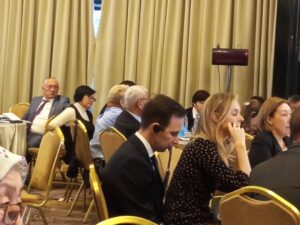
The event was attended by 148 people, of whom:
(men – 72, women – 76)
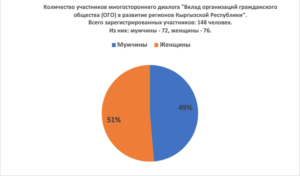
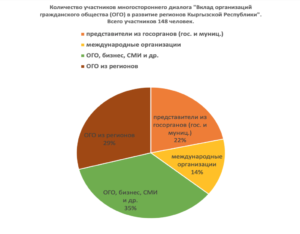
There were only 148 registered participants. Of these:
– representatives from government agencies (state and municipal) amounted to 32 people;
– international organizations – 21 people;
– CSOs from the regions – 43 people,
– CSOs, business, media, experts, etc. – 52 people.
This dialogue took place within the framework of the “Effective Governance for Economic Development” (EGED) program implemented by ACTED Kyrgyzstan with financial support from the UK Government, in cooperation with the World Bank.
Below you can read the press release from the multilateral dialogue:
Materials, presentations and Recommendations based on the results of the multilateral dialogue can be found below using the QR code:

A live recording of the multi-party dialogue is below:
Below you can find the Recommendations adopted as a result of the Multilateral Dialogue: